
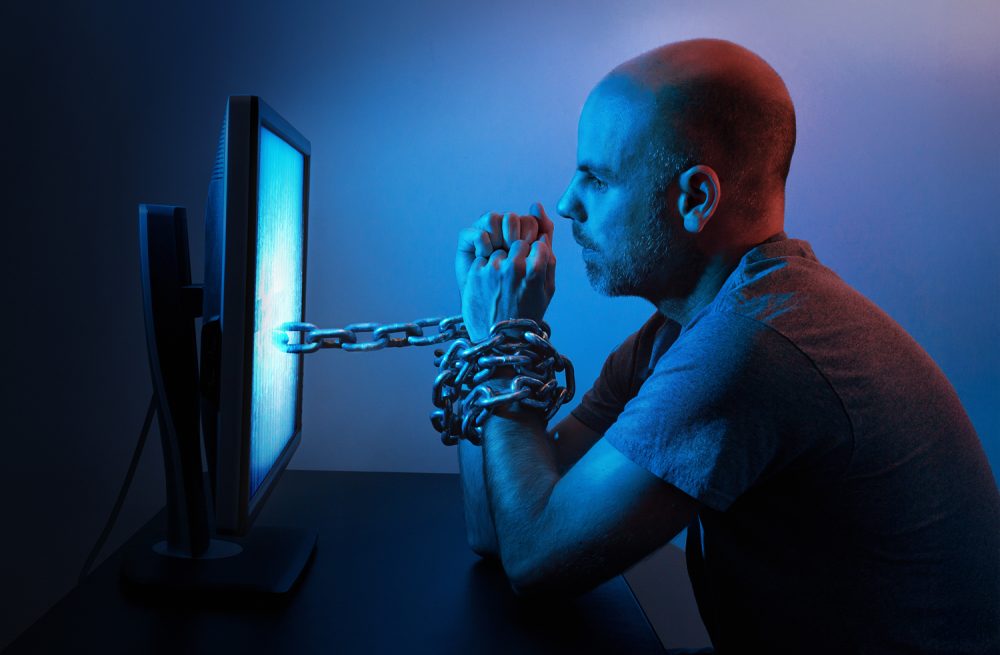
There is an argument repeated more frequently in our world today, especially in secular spaces and even among some Christians who want to minimize the seriousness of sexual sin. The claim sounds bold and dismissive: “Porn addiction is not real.” People who say this often insist that pornography is nothing more than a habit, a preference, or a private choice. They argue that addiction is a dramatic label people hide behind when they lack discipline or moral strength. They insist that if someone truly wanted to stop, they simply would. Others insist that because porn is so common in society, it could not possibly be something as serious as an addiction. Underneath these statements lies a misunderstanding of how sin works, how the heart works, how desire works, and how bondage forms over time. Pornography addiction is not a myth, nor is it an exaggerated label for ordinary temptation. It is the harsh reality experienced by millions of men and women today. Where marriages are broken and where real sin and shame live.
Why People Claim Porn Addiction Is Not Real
Many deny the reality of pornography addiction not because the struggle is harmless or easy to overcome, but because admitting bondage requires admitting brokenness. To acknowledge addiction is to acknowledge that sin has gained territory in the heart, that the will has been weakened, and that the soul needs help from God and His people. The Bible explains this progression of sin in James 1:15, “Then desire when it has conceived gives birth to sin, and sin when it is fully grown brings forth death.” It is far easier for the human heart to call something “a choice” than to confess that the choice has begun to master the chooser. It is far more comfortable to label pornography as “normal behavior” than to face the truth that when sin is fully developed in the human soul, the outcome is death. Denial becomes a refuge because truth requires humility, repentance, confession, and the courage to let God touch the wounds beneath the behavior. If pornography is treated as insignificant, then no repentance is needed. If addiction is dismissed, then no healing must be pursued. But Scripture is clear that sin left unconfessed does not disappear, it grows in the dark. Denial may feel safe, but it never heals.
For anyone who has lived within this battle, the truth is unmistakable. The man who swears he will never return yet finds himself falling again understands that his willpower has limits. The man who weeps confessing before God yet cannot break the pattern on his own knows that something deeper than simple choice is at work. These are not the marks of someone who thinks porn addiction is not real. They are the marks of someone caught in spiritual bondage, someone who feels pulled by desires stronger than his resolve. Scripture calls this slavery to sin, a bondage of the heart that only Christ can break. Pornography addiction is not imaginary, and it is not exaggerated. It is a form of spiritual captivity and temporary medication disguised as pleasure, and every man who has tasted its chains knows that freedom does not come through denial but through the grace, truth, and the power of Jesus Christ.

Scripture’s Language for Addiction: Bondage, Slavery, Mastery, and Dominion
People often say the Bible never uses the word “addiction,” and therefore addiction must be a modern invention. But the Bible uses an even stronger word. Scripture calls it slavery. Jesus Himself said, “Everyone who practices sin is a slave to sin.” The apostle Peter wrote that “a man is enslaved by whatever overcomes him.” Paul described his struggle with sin as an inner war where he did the very things he hated and felt powerless to resist. These are not descriptions of ordinary habits. They are descriptions of bondage, captivity, and dominion. Porn addiction falls perfectly within this biblical category because it operates the same way sin has operated since Genesis. It seduces. It deceives. It takes root and it never let’s go.
No one becomes addicted immediately after the first exposure. Bondage forms through repetition and when it is the only escape from your wounds and traumas. A man believes he is in control until the day he realizes control has shifted and now something else speaks louder than his convictions. By the time the heart awakens to that reality, the chains have already formed. Scripture does not soften this truth. Sin is not passive. It does not remain neutral. It seeks mastery. Genesis 4:7 states, “If you do well, will you not be accepted? And if you do not do well, sin is crouching at the door. Its desire is contrary to you, but you must rule over it.” Pornography becomes an addiction the moment it begins to gain mastery over a person’s choices, emotions, reactions, thoughts, and desires. Even those who deny addiction use the language of slavery without realizing it. They say things like:
- “I feel stuck,”
- “I hate this about myself,”
- “I don’t know why I keep doing this,”
- “I wish I could stop.”
These are not the words of someone free. They are the words of someone captured.
Why Porn Becomes Addictive: The Heart Seeks Refuge Somewhere
To understand whether porn addiction is real, you must understand why people return to pornography again and again. Pornography initially enters the life of a person as novelty. It feels exciting, stimulating, pleasurable, and new. Curiosity becomes indulgence. Indulgence becomes exploration. But over time, something shifts. Porn no longer becomes something a man seeks only for thrill. It becomes something he seeks for relief. When the pressures of life rise, when responsibilities feel heavy, when stress increases, when loneliness hits, when rejection stings, when disappointment surfaces, the heart looks for something to soothe the ache. Porn becomes that escape. Porn becomes emotional medicine. Porn becomes what you reach for when you do not know what to do with your pain.
This is why many men say their porn struggles worsened during seasons of stress, loss, heartbreak, uncertainty, or emotional exhaustion. Pornography becomes the emotional aspirin that numbs the symptoms but never heals the wound. It becomes the counterfeit refuge that promises comfort but delivers bondage. It is a place to hide rather than a place to heal. Addiction takes root not because the content is sexual, but because the heart begins to depend on pornography to regulate emotions, silence anxiety, numb pain, or avoid the vulnerability real relationships require. That dependence is the foundation of addiction.
Why “Just Stop” Fails: The Will Cannot Heal the Wound the Heart Is Trying to Medicate
If porn addiction were not real, then “just stop” would work. People would stop the moment consequences appeared. They would stop the moment shame hit. They would stop the moment their marriage was threatened. They would stop the moment their conscience felt conviction. But countless men have discovered painfully that stopping is not the same as wanting to stop. They want to stop. They pray to stop. They say they will stop. They weep because they cannot stop. They make promises but break them. They try harder, but relapse. This is not weakness. This is bondage.
Addiction is not cured by trying harder because addiction is not a willpower problem but a wound problem, and a person can love God sincerely while still battling sexual sin if deep wounds and buried trauma have never been brought into the light.
Many believers carry pain that has been pushed so far into the depths of the heart that no one is allowed near it, and pornography becomes a false refuge that numbs the symptoms without healing the source. True freedom begins when a man courageously unearths what he has spent years avoiding, allowing the Holy Spirit and godly community to address the root causes that his own strength could never fix. Trying harder only tightens the chains, but bringing wounds into the light before Christ and trusted brothers opens the door for the kind of healing that restores identity, renews the heart, and breaks the power of addiction at its source.
Addiction Is Recognized by Patterns, Not Labels
Those who insist porn addiction is not real often have a narrow definition of addiction. They assume addiction requires a specific frequency or severity. But addiction is not measured by how often a person looks. Addiction is measured by how strongly the behavior controls the person’s heart. Some men view porn occasionally yet cannot stop thinking about when they will view it again. Others view it nightly with deep remorse but cannot break the routine. Both are experiencing the same underlying bondage. Addiction reveals itself in repeated patterns that continue despite regret, consequences, or desire to change. A man who falls repeatedly even though he hates the fall is not weak. He is battling something bigger than himself.
The presence of secrecy reveals addiction. The presence of shame reveals addiction. The cycle of regret, resolve, relapse, and remorse reveals addiction. The feeling of being “pulled” rather than choosing freely reveals addiction. Porn addiction is not defined by frequency. It is defined by captivity.
How the Heart Becomes Bound: Fantasy Replaces Reality
Porn replaces what God intended to be cultivated through relationship, vulnerability, patience, and holiness with instant gratification that costs nothing on the front end but everything on the back end. Porn offers arousal without intimacy, vulnerability, and without responsibility. The heart becomes conditioned to seek sexual stimulation without emotional labor. Real intimacy becomes more difficult, because real intimacy requires patience, honesty, courage, selflessness, and emotional presence. Porn offers a counterfeit alternative that conditions the heart to reject the very things God created sex to thrive upon.
Because of this, pornography never stays external. It seeps into the inner life and slowly reshapes a person’s desires. Paul warns in 1 Corinthians 6:18 that sexual sin is uniquely damaging because it is “against one’s own body,” meaning it bends and distorts what God designed for intimacy, covenant, and connection. When a person continually turns to sexual immorality, the heart becomes trained to reach for cheap pleasure instead of genuine relationship, and the body begins to crave fantasy more than reality. As technology makes sexual imagery more accessible and isolating than ever before, many retreat further into secrecy, choosing virtual satisfaction over real human connection. Fantasy begins to feel safer than vulnerability. Solitude feels easier than community. Over time the inner world divides, leaving a person emotionally numb, relationally withdrawn, and spiritually dulled. This inner fracture makes sin harder to confront and easier to repeat because the heart is being shaped by counterfeit intimacy instead of God’s design for wholeness.
Why Porn Addiction Damages Relationships
To argue that porn addiction is not real is to overlook the countless marriages wounded and destabilized by its presence. Pornography erodes trust quietly and gradually, long before the secret ever comes to light. It weakens communication, fuels emotional distance, produces secrecy, and invites shame to live in the heart of the relationship. Wives often describe feeling rejected, confused, betrayed, or unseen, while husbands describe feeling overwhelmed, ashamed, isolated, and trapped. Pornography teaches the heart to take without giving, to seek pleasure without offering love, which stands completely opposed to God’s design for covenant intimacy. Even after confession, the path toward healing requires time, patience, accountability, grace, repentance, and consistent rebuilding of trust, because the wound created is not small. It reaches into the emotional, relational, and spiritual core of the marriage.
Pornography has become so normalized in our sexualized culture that many people assume it is harmless, but when that mindset enters a marriage it quietly wounds the heart of a spouse who begins to feel inadequate, unseen, and “not enough,” even though the issue is not their attractiveness or worth but the unresolved wounds and traumas their partner is medicating through sexual fantasy. Porn teaches the mind to pursue pleasure without covenant, without sacrifice, and without love, and its scripts often normalize violence, degradation, and selfishness as if they were mutually enjoyable, which leads many husbands to unknowingly practice in the marriage bed what they learned in porn rather than honoring the sacred, tender, self-giving intimacy God designed. This is why porn addiction damages relationships so deeply: it replaces real connection with fantasy, real affection with performance, and real marital unity with emotional distance, leaving both spouses hurting in different ways and highlighting why healing requires not shame or secrecy but honesty, repentance, and the redeeming power of Jesus Christ.

The Truth: Porn Addiction Is Real, but So Is Freedom in Christ
Porn addiction is real because sin is real, bondage is real, and the human heart is deeply shaped by whatever it repeatedly turns to for comfort, escape, and refuge. Yet the power of the gospel is greater than the power of any addiction. Jesus does not simply forgive sin in theory. He breaks chains in reality. He restores clarity to minds that have been clouded, and He reshapes desires that have been twisted by years of secrecy and shame. He meets the believer in their lowest place, not with condemnation, but with invitation. In His presence, shame begins to loosen its grip, identity is rebuilt, and the heart slowly learns to crave what is holy instead of what once enslaved it.
The fact that porn addiction is real does not mean a man is hopeless. It means he needs something stronger than willpower and deeper than self-discipline. It means he needs spiritual transformation, not personal resolve. Christ came to set captives free, and that freedom is not abstract or symbolic. It is practical, experiential, and available to anyone willing to step into the light. The moment a man stops hiding, confesses what he cannot conquer alone, and surrenders his struggle to the Savior who has never been defeated, the process of healing begins. The road may be long, but freedom is real because Jesus Himself walks the journey with those who refuse to fight in secret any longer.